User experience (UX) is not just about usability — it’s about feeling.
The best designs don’t simply guide users; they connect with them emotionally. Whether it’s joy, trust, curiosity, or surprise, emotional design transforms ordinary interfaces into meaningful experiences.
In the digital world, emotion is what turns users into fans and interfaces into memories.
1. What Is Emotional Design?
Emotional design focuses on creating products that elicit specific emotions to enhance user satisfaction.
It’s rooted in psychology — understanding how visuals, language, and interactions can trigger emotional responses that shape perception and loyalty.
Don Norman, the father of UX design, described it as the intersection of visceral, behavioral, and reflective design — where aesthetics, usability, and meaning meet.
2. Why Emotions Matter in UX
Emotions drive decisions. People don’t just choose the most functional option — they choose the one that feels right.
When a product feels delightful and empathetic, users:
- Stay longer
- Return more often
- Recommend it to others
Designing for emotion helps brands stand out in a world of similar products. It’s not about more features — it’s about a better feeling.
3. The Layers of Emotional Design
Visceral Level — What users see first
- Colors, shapes, and imagery create the first impression.
- A clean, bright interface feels inviting; dark tones may feel serious or luxurious.
Behavioral Level — How users interact
- Smooth transitions, responsive buttons, and natural feedback make users feel in control.
- Microinteractions (like a subtle “ding” when a task completes) add satisfaction.
Reflective Level — How users remember
- The story your product tells — and the values it communicates — builds long-term emotional bonds.
Example: Think of how Apple products make users feel elegant and capable beyond just using a phone or laptop.
4. Emotional Triggers in UX
| Design Element | Emotional Impact |
|---|---|
| Color | Sets tone and mood instantly (red = urgency, blue = trust) |
| Typography | Builds tone of voice — friendly, serious, or elegant |
| Imagery | Tells a story and connects emotionally faster than text |
| Microinteractions | Add delight, surprise, or reassurance |
| Sound & Motion | Reinforce feedback loops that “feel alive” |
5. Designing with Empathy
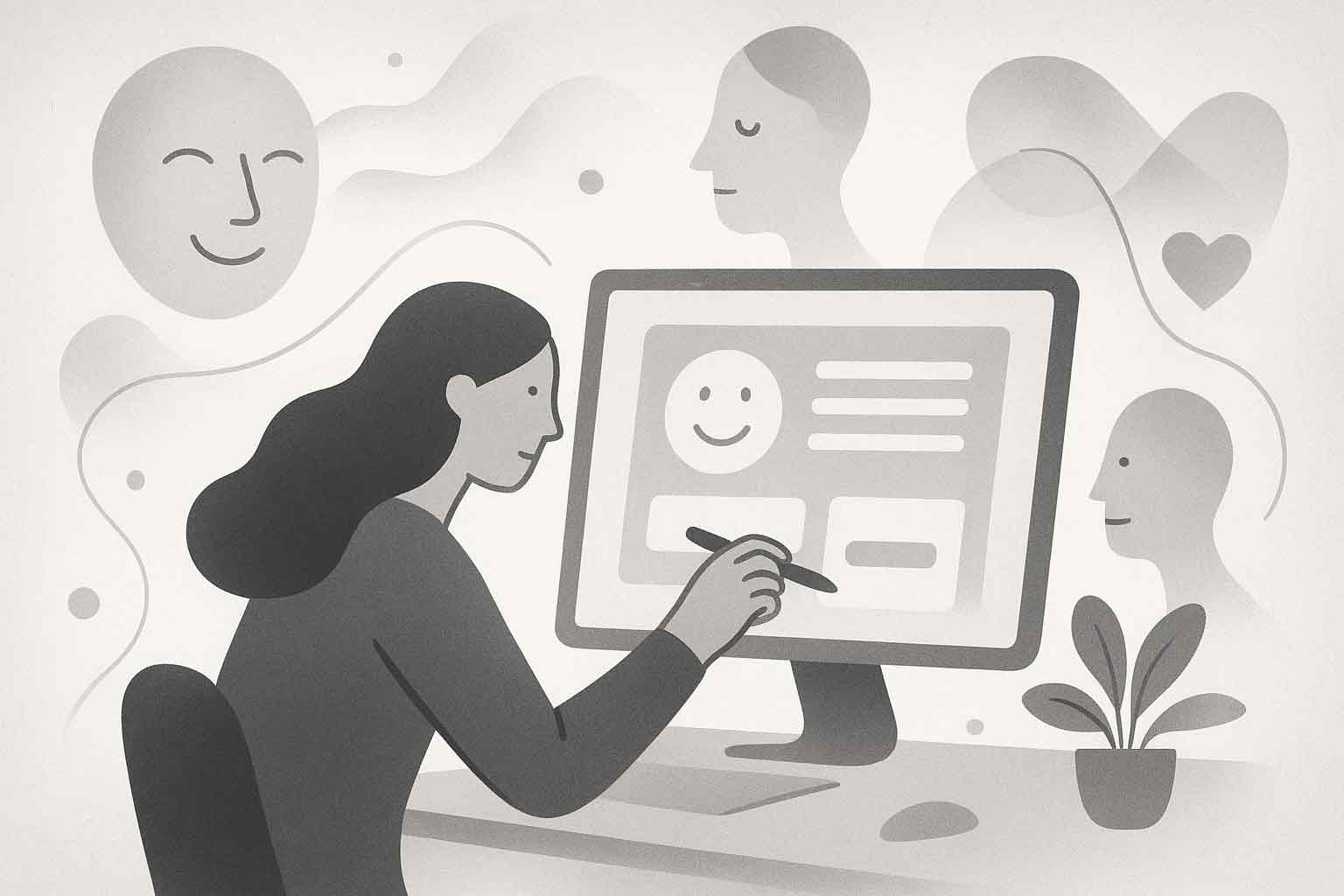
Empathy is the heart of emotional design.
Before sketching interfaces, designers must ask:
- What is my user feeling in this moment?
- How can my design respond with warmth, clarity, or encouragement?
The goal isn’t manipulation — it’s understanding.
Good UX acknowledges human emotion as a natural part of interaction.
6. Case Study: Spotify
Spotify doesn’t just play music — it understands moods.
From playlists like “Feeling Happy” to dynamic color backgrounds and animations, its design adapts emotionally.
That’s why users feel a connection rather than just utility.
Conclusion
Designing for emotions is designing for humans.
When empathy, psychology, and aesthetics align, your interface becomes more than a tool — it becomes an experience.
Remember: users might forget what your product does, but they’ll never forget how it made them feel.